Friday, February 28, 2014

From Russia, With Love

It’s been several days, and I have been forced to notice a small, ring-shaped hole in my life. I am personally reminded at every Olympics how the games for me resemble a relationship in an incubator. For two weeks it’s nearly complete immersion. First comes the opening ceremony - I meet the country hosting the games and its many competitors. We get acquainted. There’s a spark. We’re both excited about the possibilities. Then, the games begin. They sweep you off your feet (especially when the United States takes the very first gold). We get more and more serious as the days ensue. Dates are implied. Every night, eight o’clock. Sometimes we’re up all night to get lucky. Sometimes things seem that they could not be any better; other times, we fight, and despite my verbal abuse, the Olympics always gets her way. Drama mounts towards the end, as the medal count seesaws. We ask each other to put everything we have into this, knowing the relationship’s terminal state. Then, when the closing ceremony comes, we regretfully say our goodbyes, and we prepare to grieve what we knew could not last (though she said she’d be back in a couple years…).


This year, in seeking catharsis, I wanted to compile a list of some of the memories. Just as in any relationship, there are many good ones, a few bad, and some that we remain ambivalent towards. But in the end, it serves us in our grief to create a space of loving memory for the lost in being able to appreciate the time we had together. I hope these memories can assist you with your own grieving process.


Failure


Let’s start with the bad. Sometimes, initially after the breakup, it is helpful to be able to sit with a good friend and vent about all the things that make your ex a terrible person. Let’s take a look at some of the failures of the 2014 Winter Olympics.


Sochi


Sochi in and of itself was a bit of a failure, as the infrastructure didn’t quite come together in the end. Reports of open-concept public restrooms, pee-colored water, and disastrously long waiting periods in the lines of the vendors were just a few of the criticisms that made yuppy Westerners cringe.


Insignia Fail


Four rings instead of five...the firing squad could be heard echoing off the mountains that night.


Bob Costas/Matt Lauer


Costas is lucky Rick was not in Sochi.
Initially it was just a humorous puffy left eye that was trending on Twitter. A few days later, the NBC medical staff was forced to conduct a full-body examination, checking for any bite marks or large chunks of skin and muscle that had been ripped off, in case Costas was in fact making the slow transition to undead. Costas bravely persisted with several evenings of self-deprecating reporting, but he eventually was forced to pass the reigns to Matt Lauer. Lauer may be a kind and winsome face, but there’s a reason why he is on The Today Show and not covering high-profile sporting events. Zombie Bob Costas was suddenly missed.


Shaun White and Company


Unhand Flying Tomato, hipster Shaun White!
Many countries have their shtick. In the Winter Olympics, Russia has figure skating; Canada has hockey; Switzerland and Austria have downhill skiing; the Netherlands has speed skating; the Scandinavian countries have cross country skiing; Germany has luge; and the United States has snowboarding halfpipe. Since its inception at the Nagano games in 1998, the United States had taken eight of the twelve medals in the halfpipe, including three of the four golds and a sweep of the event in Salt Lake City in 2002. But this year at Sochi, Americans failed to make the podium. Three made it to the finals, but none, including favorite Shaun White, medaled.


Hockey


In the 2010 Vancouver games, the men’s gold medal game ended with an epic overtime goal by Sidney Crosby, putting Canada over the United States 3-2. The women suffered a similar fate, losing to Canada 2-0 in the finals. Both losses for the Americans left our nation largely in want. This year’s Olympics seemed poised for both US teams to claim their revenge. The men’s team was dominant in the games leading up to the semis, while the Canadian men in comparison seemed a bit lethargic. But when it came time to play, it was clear that the Canucks were just...better. With a suffocating defensive effort, one goal was all the Canadians needed to steamroll the American team in a shutout. Demoralized, our men would go on to lay an egg against Finland, being shutout again in a 5-0 loss. Even more gut-wrenching than the men’s tournament disappointment was the way in which our women’s team lost. Up 2-0 against the Canadians with less than four minutes in the gold medal game, Canada would go on to unleash a scoring barrage against the Americans - two goals within two and a half minutes and the winning score in sudden-death overtime. It was nothing less than shocking…like a swift kick to the groin. Canada...my neighbor to the north...I asked for your tunic, and instead you took mine and the shirt off my back.
Revenge - a dish best not served?


National Anthem


I saw way too many Americans stumbling through the words to the Star Spangled Banner. This wicked and perverse generation! Why do we not know the words to our own national anthem, played or sung nearly ubiquitously before any large event? Better still, why are our athletes going into the Olympics not thinking ahead to the moment when they may be standing on the highest podium, listening to their country’s anthem being played? You’d think at the very least they’d cram for it after winning an event. Still, if you don’t know the words, there remains a simple solution: don’t sing. As a viable alternative, close your eyes and act as if you are going through an intense spiritual moment. It may look even more reverent than if you were singing.


Ambivalence


I had mixed feelings towards these things…


Ice Dancing


Charlie White and Meryl Davis won ice dancing gold! Whoo!! ...what is this sport?? Admittedly, I’m not big on dancing. You will probably never see Swedish people in this event. Moving our limbs in perfect harmony with music was never our strong suit, and because people sucked at it, they declared it a sin. I tried to watch this event, and I must admit I just don’t really understand how any of these couples distinguish themselves from the others. They all do the exact same routines, and to an untrained eye such as myself, they all appear as if they don’t screw up. Figure skating at least has a prevailing technical element to it. The jumps are extremely difficult, and it’s clear when something goes awry there. With ice dancing, I find myself scrutinizing the synchronicity of the dancers’ twizzles. ...twizzles. There also seems to be absolutely no element of surprise or chance of upset in this event, making it incredibly non-compelling. Charlie White and Meryl Davis were the frontrunners coming in, with Canada not too far behind, and everyone else light years in back of them. And low and behold, that’s exactly how it played out. It’s women’s NCAA basketball all over again. It seems like reputation drives the results of ice dancing more than any other Olympic event. I have no clue as to why our ice dancers were better than the rest of the field. Was it White’s flowing blond locks?
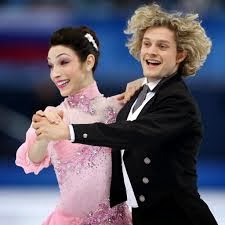
I mean...I guess. 


US Women’s Figure Skaters


Gracie Gold…
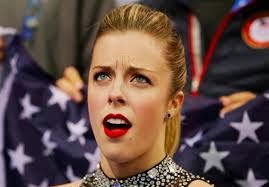


...and Ashley Wagner.


Scandal


I want to highlight two scandals of the 2014 Winter Olympics, both involving Russia and South Korea. Coincidence? Read on and decide for yourself.


Viktor Ahn


...or is it Ahn Hyun-soo? With four more medals in Sochi, Ahn has become the highest decorated short-track skater (objectively the best Olympic event, summer or winter) in Olympic history. American Apolo Ohno is the only other competitor to reach eight medals, but there is no question Ahn represents the gold standard of the sport. Ohno won his eight - two gold, two silver, and four bronze - over the course of three Olympics (2002, 2006, and 2010). Viktor Ahn has won eight - six gold and two bronze - in only two Olympics (2006 and 2014). Ahn missed the Vancouver games due to injury.
Huh?

So what is so scandalous about that? Ahn competed for South Korea in the Torino games as Ahn Hyun-soo, but he competed for Russia in Sochi as Viktor Ahn. Apparently he had a falling out with his country and team in between those eight years (possibly having to do with not being able to compete in Torino). After training in Russia and gaining citizenship as a Russian, Ahn decided to compete for Russia and proceeded to win four medals (three gold) for the home nation in 2014. Was this simply an example of spiteful defection, or is there corruption looming behind all of this?


Yuna Kim


You will scarcely find anything but gold on Yuna Kim’s career figure skating resume. If you wikipedia her, you will find fifteen golds, six silvers, and two bronze. In the 2010 Vancouver Olympics, Kim shattered Olympic records and won gold by an obscene margin of twenty-three points. Though her technical program was not as difficult in Sochi, Kim still skated beautifully, seemingly to perfection. Despite this, Kim lost the gold in favor of Russian skater Adelina Sotnikova. Sotnikova’s routine did include a more difficult program than Kim’s, but she stumbled on one of her jumps in the free skate, and by all accounts her artistry does not hold a candle next to the sublime interpretation that Yuna brings to her skating.
Yuna Kim deserved better
What makes matters truly shady in this is that figure skating, a sport that has historically been maligned in being rife with corruption, still seems to have woven into its system an inordinate potential for judges to doctor the books. Within the rules of figure skating, judges are chosen from a pool of thirteen countries, with eight judges only working either the short program or the free skate. In Sochi, judges from the USA, Great Britain, Sweden, and
South Korea who had worked the short program were replaced by other judges, notably a Ukrainian (formerly of the Soviet Union) who had been kicked out of judging for a year from trying to fix the ice dancing competition in Nagano, and a Russian judge who is married to the Russian federation president. This doesn’t stink...it reeks of bias. On top of all of this, the judges’ scores are to remain anonymous, conveniently doing away with any kind of accountability for the way these judges individually decide the skaters’ fates. How figure skating continues to operate under this kind of blatant neglect for sense is as mystifying as it is shameful.


To review, both of these scandals witnessed the pirating of gold medals from the future host country of the Winter Olympics, South Korea, in favor of the current host, Russia. I’m not one for conspiracy theories; this may be complete coincidence. But even I have to admit this looks like a big eff you! from the Ruskis.


Glory


But much of the 2014 Winter Olympics was indeed glorious. This is how I will choose to preserve the memory of these games…


Sochi


Despite Sochi’s inadequacies, which I can blame the Russian government for, the Sochi landscape was breathtaking, of which I can credit God. Picturesque does not seem to do justice to much of what I saw. To a Swedish American prodigal residing in Southern California, seeing a camera pan across miles of snow-crested conifers that decorate a majestic mountainous landscape has a pied piper effect in calling one Home.


Skiing Slopestyle


In the event’s Olympic debut, Americans Joss Christensen, Gus Kenworthy, and Nicholas Goepper swept the podium, setting a standard for perhaps a new Olympic event which America can try to distinguish itself in.


Security


You’d have to be an exceptionally stupid terrorist to terrorize Russia, especially after the ringleader of the ring fiasco was made an example of. Still, no explosion is a huge cause for celebration. Kudos to Russian security! *I find it prudent to note here that no one was actually murdered for a failure in the rings display...to my knowledge...


Closing Ceremony (Olympic Spirit)


The Closing Ceremony on Sunday night was nothing short of spectacular. The overwhelming beauty of Russian culture was highlighted in its art, garb, music, and dance (ballet). Russian culture is incredibly unique in the themes that it shouts. A people who have toiled one of the harshest landscapes in the world, endured the political regimes of the czars, Stalin, and Gorbachev, thwarted the invasion efforts of two of the world’s most powerful dictators (Napoleon and Hitler), and who put up with communism for the better part of the 1900s have managed to seamlessly weave both agony and hope into the comprehensiveness of their culture. It is a culture that contains nearly tangible expressions of yearning so powerful that it can only originate somewhere very deep within the souls of those who create it.
My area of study has only brought me to extensively delve into one facet of Russian culture - its music. In this area, I can safely say that of all the music I have studied, none is as uniquely evocative as that which Russians have produced. Composers of incomparable skill and passion - Mussorgsky, Tchaikovsky, Rachmaninoff, Stravinsky, and Shostakovich, among others - have all contributed numerous pieces that have more than inspired me. That is all to say that the Closing Ceremony was marvelous in showing the world the abridged demonstration of the beauty of Russia. The transition to South Korea was extremely tasteful and gave us a sneak preview of a land in stark contrast to the host country (though they are practically neighbors) - something as equally beautiful and mesmerizing, though altogether entirely different. 

Chris Collinsworth said at the close of the ceremony that with every Olympics, the world shrinks just a little bit in size. These windows into the people of our world represent the true beauty found in the Olympics. There are elements that far transcend the mere act of athletes from around the world coming together to compete against each other. That is only the alibi. The Olympic games are an excuse for countries of the world to gather together, be in awe of, and celebrate one another. We didn’t have to be in Sochi for that to occur. The Olympics are a reminder that every person in the world has a story to tell that reaches back long before their birth, and for that story to be shared and listened to is an incredible blessing.


So as that giant fluffy bear cried a single tear while extinguishing the Olympic flame, many of us felt the emotion of the moment well up inside of us as well. It was more than just nostalgia for remembering the journey of the two-week relationship we had just invested in. It was a tear shed because we’re all better people for having experienced it together. It was a tear shed because it only comes around once every two years. If you could put the tear into a pensieve, you would find that the sum of those memories is greater than its parts, and that beautiful product of sentiment is too great for the body not to respond in unison with the spirit.


Thank you, Sochi. Thank you, Russia. Thank you, world. It’s been a beautiful two weeks; indeed, an oddly beautiful harem.

Viva Rio!

Saturday, January 25, 2014

False Grit

It's more of a finesse game (now), it's more small ball, which personally I don't really care much for. I like kind of smash-mouth, old-school basketball because that's what I grew up watching. Some of the flagrant fouls that I see nowadays just makes me nauseous. You can't touch a guy without it being a flagrant foul. Back then, guys put their hands on you...you didn't want to go all the way to the basket because you'd get knocked (flat)...Kids might be a little too sensitive for that nowadays.
-Kobe Bryant

The Pilgrims arrived in America in 1620. To be specific, they arrived in November...in Massachusetts. I like to imagine the moment when the 121 passengers on the Mayflower finally laid eyes upon the land they were about to settle...

121 passengers, in unified elation
WHOOOOO!!! WOOOHOOOOO!!! WHOOOOOOOOOOO!!!!
snow begins to fall
.......................*one passenger, in a flinty solo* whooo ...................

They could have gone anywhere on the eastern seaboard, and they chose Massachusetts...in winter. I mean, I know Florida is a ways down there, but it tends to remain nice year-round. In any case, 50% of the passengers had died by the end of that first winter, either from disease, starvation, or freezing one's ass off. But they planted a settlement, and they raised bountiful harvests with the help of Squanto, and thus, American grit was born. 

Here are some buzz words when reflecting upon romanticized American history: rugged, tough, cowboy, Alamo, frontier, bootstraps, Oregon Trail... I mean, simply by playing that game, we all understood what it truly meant to be a settler. You can sum it up with this axiom: ford the river. Why? Because eff that ess, that's why! Never mind the ramifications that this may mean we're careless or stupid. If prudence was what we were going for then we'd take the ferry every time. Well screw that. The river is ten feet deep? Aint too deep for this wagon. Let's ford this beeatch! I may lose both my oxen, half my supplies, my wife, one of my two kids, and develop a raging case of dysentery, but I got the stones to do it. That's what's important here. And everyone understood that. You'd look over at your buddy next to you, who was busy shooting his forty-ninth buffalo, and you'd motion to your own screen and say, dude, it's ten feet deep. As your mouse cursor slowly scrolled over to the "ford" button, your buddy pursed his lips and nodded in approval. In all actuality, this experience would go down much like my conjured image of the settlers laying eyes upon Plymouth Harbor...

your oxen begin to pull your wagon into the river
Whoooo! Woooohoooo!! WHOOOOO!!! 
your wagon breaks apart, and you lose everything
...whoo.......


Sure, you might have sucked at the game, but you were awesome at being a bonafide American. 

Over the course of our young history, this country has branded itself as "American tough", and it has been imbued in all that we do, even the sports we play. 

Think of some of the most iconic moments in American sports history: with both legs injured in the previous series and battling a stomach virus, Kirk Gibson hits a walk-off homerun off legendary closer Dennis Eckersley in Game 1 of the 1988 World Series. In Game 5 of the 1997 NBA Finals between Chicago and Utah, Michael Jordan scores 38, grabs 7 rebounds, and assists 5 while also battling a stomach bug ("The Flu Game"). Immediately following the conclusion of the game, Jordan would collapse into Scottie Pippen's arms from pure exhaustion. In the 2009 NFC Championship Game, Brett Favre, at age 40, after already having surpassed the NFL record for most consecutive starts at one position (291), could be seen repeatedly limping back out onto the field after having been battered by the New Orleans Saints defense. Favre would go on to eventually lose the game on an ill-advised throw that was picked off, but the image of the Old Warrior will forever be burned into our memories. 

There is something magical about these mind-over-matter moments, when sheer will power, in an act of defiance over the body's limitations, projects one to do things they should not be capable of doing. Two mornings before Game 5, as Jordan lay in a fetal position, sweating profusely, with hardly the strength to sit up, he was told by team doctors that there was no way he would be able to play. Not only did he play, but he played like Jordan - like someone who is not of this world. 

We love this stuff because, among other things, we see a little bit of Pilgrim in these moments - good old American grit. There's something noble about someone putting their body on the line for the greater good of the group. There's also something badass about it. The American value of toughness has permeated sports in an indelible way, and athletes don't necessarily need to play hurt in order to exhibit it. We love the brand of sports that is contact heavy and defiant in the face of danger. We love the baseball player who runs full speed at the catcher in order to jar the ball out of the mitt, a la Pete Rose (Charlie Hustle). We love the basketball player who ferociously throws their weight around the paint in order to get the rebound, a la Charles Barkley. We love the quarterback who's willing to dive head first into the endzone rather than slide two yards short of it, a la John Elway. We love the football players who play in Green Bay, in minus-twenty conditions without any extra layers on, as they flip the bird to Old Man Winter. We admire this style of play. It reeks of American ruggedness. 

The culture, however, seems to be changing, to my chagrin. We seem to be getting softer with every generation. Even the official rules of our sports are being amended in order to cater to the finesse style ("finesse" being a euphemism used in order to make soft play sound cool). I'm with Kobe. It's a bit nauseating to see the direction we're headed. I blame soccer (I'll explain this later). 

So this blog is dedicated to the uncovering of the truth - that we are a nation in a precarious spot concerning our sports culture. The identity of American grit as found in sports is in jeopardy, and we are well on our way to endorsing and embodying competition that some would call finesse and what others call nauseating. The following is the empirical proof:

Rules

The rules, as they say, are the rules. They represent the marrow of the sport. When a rule is made, it changes the way the sport is played, thereby changing a bit of the sport's personality. Many of the newest rules being adopted in our sports are done so with intention to preserve the health of the players. Whether this is done with altruistic (protect a player from harm) or capitalistic (prevent a star from being sidelined) motives, the fact remains that many of these new rules are paving the way for a lighter style of play. 

Exhibit A: Baseball - Running into the Catcher

On May 25, 2011 Scott Cousins of the Florida Marlins rounded third base in the twelfth inning of the game in an attempt to provide his team with the go-ahead run. There was just one problem - Buster Posey. San Francisco's budding star catcher was in Cousins' way with the ball in his possession. Cousins proceeded to do what every runner in that situation has been taught to do since the inception of the game of baseball - accelerate to ramming speed and collide with the catcher, in hopes to jar the ball loose. If the catcher does not hold on to the ball, the run will score. Cousins was successful. He threw his entire body with reckless abandon into the future NL MVP, causing Posey to drop the ball. The play was terrible and beautiful all at once. Cousins' momentum caused Posey to tumble backwards awkwardly, cringing in the horrible pain that comes from a fractured fibula and torn ligaments in one's ankle. The play was legal and clean, according to the rules. Cousins scored the winning run in the Marlins' 7-6 victory. Posey was out for the remainder of the season. 

Baseball has always been on the fringe of being considered a "contact sport". With the exception of plays at the plate, such as the case with Cousins and Posey, and the occasional being hit by a pitch and sliding into the second baseman to break up a double-play, baseball is devoid of bodily contact. One could play the entire course of a game and not feel any more contact than a pat on the butt by the first base coach or a high five from a teammate. Colliding into the catcher is nearly all baseball has to hang its hat on. 

Yet following Posey's season-ending injury, Major League Baseball has seriously discussed initiative for mitigating, if not doing away entirely with collisions at the plate. This could come as early as this upcoming season. Regardless of when it will come, the ruling seems imminent, and baseball will lose one of the only aspects of the game keeping it a legitimate contact sport. Taps 

Exhibit B: Basketball - Hands on the Defender

Beginning this season, referees in college basketball are to enforce more stringent prohibitions on defensive use of hands. The new rules call for refs to give out fouls when the defender carries out these actions to an offensive player with the ball:
  • Keeps a hand or forearm on the opponent
  • Putting two hands on an opponent
  • Continually jabbing an opponent by extending an arm or placing a hand or forearm on the opponent
  • Using an arm to impede the progress of a defender
Translation: no touching! These regulations have been put into effect in order to increase scoring and freedom of movement, but some coaches, such as Kansas head coach Bill Self, are not very optimistic about the effect the rule changes will have on the game. Self responded by saying, The best way to increase scoring and make the game better is to create situations to get more shots. More free throws doesn't make the game better. One thing is certain: the new rules will not only discourage stingy, physical defensive play, but they will also contribute to a higher number of players fouling out. Perhaps this will engender the exact result that college basketball wants. If players accrue fouls early and often, they will be forced to avoid making stout defensive plays later on in the game. Wide open lanes and no defense...sounds like compelling basketball to me. 

Exhibit C: Football - Illegal Hits to Defenseless Players

In the course of the past three to five years, the NFL has tightened its grip upon defensive players concerning where and when they can make hits. Increasing fear of trauma to the head and the ramifications of concussions has led the NFL to ban helmet-to-helmet hits, or really anything above the shoulders. This has undoubtedly aided offenses, as such hits are penalized to the tune of 15 yards and a first down (and an eventual fine on the player who made the hit). 

Rewind to November 17 of this past year. The San Francisco 49ers were visiting the impossibly-difficult-to-beat-at-home New Orleans Saints. With less than four minutes to go in the fourth quarter and the Saints down a field goal, Drew Brees had driven the Saints into the red zone putting San Francisco in dire straits. In a heroic display of athleticism, linebacker Ahmad Brooks rushed the quarterback, wrapped around the right side blocker, blind-siding Brees, who was looking left. Having cut too far downfield to square up on Brees, Brooks had to thrust his arm out in order to catch the short quarterback, and did so, right where the shoulder meets the neck. The ball came loose, and San Francisco recovered it. It was a laudable play from Brooks, who had given his offense the ball with the chance to run the clock out for the
win. But a yellow flag had been thrown. It turns out that referees had deemed the hit too close to Brees' head. The fact that Brees is relatively small, and the way he appeared to have been knocked like a rag doll, probably had something to do with how terrible the play appeared as well. "Roughing the quarterback" was called on Brooks, the 15-yard penalty was assessed, and New Orleans was given a first down. They would go on to convert two field goals and win the game 23-20. Jim Harbaugh, coach of the 49ers, was livid. He asserted that Brooks had made an incredibly adept football play - the only play that he could've made on Brees. Brees had a different perspective. After the game, he reflected, All I remember is just getting clothes-lined in the chin, and as I'm on the ground, I'm saying, "That's gotta be a flag". Following the game, ex-linebacker and now commentator Ray Lewis shared in Harbaugh's disappointment. Lewis insisted that with the flag being thrown on that play, the NFL is prohibiting Brooks from making the only possible play he can make on Brees. When commenting on Brees' remarks, Lewis said, I'm really disappointed in Drew Brees. To say that you got hit hard, knocked to the ground, and that's the reason you knew a flag had to have been called...is pathetic. This is football. Guys get hit. Drew Brees needs to toughen up. Lewis would go on to defend his fellow linebacker by offering to pay for half of his fine, following through on that promise. 

Flopping

Dammit, soccer. You've ruined everything. You've taken beautiful, passionate, physical competition and turned it into a burlesque show. Soccer players have made famous the art of flopping, which is the noble strategy of upon receiving contact (or sometimes no contact), falling to the ground, wincing and/or grimacing, perhaps writhing and/or yelling...in hopes of convincing the referee that the other player did something to be penalized for. This is all that is wrong with the world wrapped up into one sports gesture. It is dishonest, craven, weak, embarrassing, diabolical, bathed in sin...seeing it makes me want to kick the person who is flopping between the legs, in the empty area where the balls should be found. And it happens all the time. I understand that soccer is a contact sport. They have headers, which are the equivalent of baseball's play-at-the-plate. But soccer could be so much better! Unlike baseball, where players are essentially designated to paths unhindered by human bodies, soccer is a lassaiz-faire kind of field, where physicality could run amok. Here's my own personal suggestion to soccer that will never happen: if soccer allowed for more physicality (refs don't blow the whistle nearly as much), and if the goals were made wider and higher, maybe a meter by a meter (I was going to say three feet by three feet, but then I remembered that Americans don't give a crap) there would be more scoring and more physical play. Soccer would be such a badass game. As is, it kind of sucks. I could maybe deal with the multitude of 1-0 games inherently found in soccer IF the flopping did not exist to the degree that it does. But it does exist, and it's just unwatchable. Every time that I see a grown man flail, fall to the ground, and proceed to writhe and cry, I throw up in my mouth a little bit. Not only do you have to endure this drivel for the entirety of the scene, but you have to see that same person get up a minute later and run around as if nothing was ever wrong. There's a perfectly reasonable explanation for this. Nothing was ever wrong. I wish that American soccer was noticeably different - a more physical style perhaps than its world counterpart. But it's not really. American soccer players take their cues from the best, and that means looking to people like Cristiano Ronaldo. Ergo, flop city. Soccer, I will watch you once every four years, because the World Cup is pretty cool, but that's all I can take before I become a serial killer. 

I wish that flopping would have been contained within the sphere of soccer and shunned as a silly practice elsewhere, but it has spread to every sport. Behold the empirical evidence:

Exhibit A: Baseball - Derek Jeter and the Phantom Bean

It is September 16, 2010, and the Yankees are playing the Rays. With one out in the seventh inning, Rays' reliever Chad Qualls throws a pitch inside to Derek Jeter. Jeter retracts his body, but the ball appears to hit him in the elbow, as Jeter drops his bat and squirms a bit, holding his elbow and making hurt noises. The umpire tells Jeter to take first base, however Rays' manager Joe Maddon proceeds to run out of the dugout, calling bullshit. The ruling was sustained. Maddon would be ejected for arguing, and Jeter did indeed take first base. After footage clearly showed that the ball only hit Jeter's bat (which is by rule a foul ball, to be recorded as a strike, rather than a free base), Jeter admitted to having deceived the umpire through his acting. In the locker room, he said to reporters, He told me to go to first base. I'm not going to tell him I'm not going to first, you know? Yeah, we know, Derek. We also know that the Broadway act preceding the umpire telling you to go to first was entirely illegitimate and unnecessary. This sparked controversy in the world of baseball, prompting the question to fans - should this kind of play be part of the game? Umpire ruling does indeed constitute an inherent aspect of subjectivity to the game, and if they can be tricked, why wouldn't you try to pull it off for a competitive edge? Well this brings up the age-old debate of 'do the ends justify the means'? Many admire Jeter for his competitive play and willingness to do everything and anything to win. Many others consider his behavior disgraceful to the sport - that implicit in the game is the notion to play it honestly, with respect and integrity. You know where I stand on this. So I ask you, what's the difference between what Derek Jeter did and soccer flopping? If you came up with 'absolutely nothing' as an answer, then you've made an astute observation.  

Exhibit B: Basketball - "Lebron-ing"

A new trend is sweeping our nation's schools. It's called "LeBron-ing". Remember the concept of "Tebow-ing", whereas you act out the iconic pose of Tim Tebow kneeling in prayer, in order to make fun of him? "LeBron-ing" is the same concept, only rather than kneeling in prayer, you jump away and throw up your hands after slightly grazing one of your peers (in hopes of getting the call!). Kids...you gotta love em! Out of the mouths of babes! Clearly meant to be funny, "LeBron-ing" recognizes the laughable amount that James embellishes contact between he and other players, in order that they be called for fouls and he be sent to the line for free throws. Of course LeBron isn't the only player doing this in the NBA. He's simply the face of the NBA, so if he does this sort of thing, it acts as precedent for everyone else, which is scary. Now let us remind ourselves that LeBron James is 6'8", 250 pounds of pure muscle. It would take a Sherman tank to cause him to stumble. Flopping is becoming incredibly prevalent in basketball - an epidemic of sorts. Perhaps this is more of what Kobe alluded to when he described the game as "finesse". Not only are refs calling fouls, but players are clamoring for them. 

Exhibit C: Football - "Injuries" Used to Stop Clock

PLEASE DO NOT TELL ME THAT FLOPPING HAS ENTERED FOOTBALL, THE PARAGON OF SPORTS TOUGHNESS! ...Yes, I am sad to say that flopping is alive and well in football too. 

September 19, 2011. The St. Louis Rams offense has driven the ball downfield on the New York Giants and find themselves inside the 10 yardline, employing the quick, no-huddle offense. The Giants' defensive unit, urgent to mobilize into its goal line formation, out of the blue witnesses two of its players drop to the turf with inexplicable injuries. Deon Grant and Jacquian Williams could not have been more obviously acting, but there was absolutely nothing the refs could do about it. Having seen "injured" players, they were forced to stop the game, allowing the Giants to take all the time they needed in getting their defense set. This might be what you would call cheating, however as there is no way to prove the farcical nature of these "injuries", referees are handcuffed in having to stop game play. 

Less than two weeks ago, 49er linebacker Ahmad Brooks (yes, again) jumped offsides up and over Carolina's offensive line, clearing everyone. Carolina's quarterback Cam Newton, however, fell over as if he had just received a light haduken from Ryu. I'm not sure if Newton was trying to get a personal foul tacked on to Brooks' offsides or not, but the acting attempt was nothing short of pathetic. 

Come on, football. You're better than that. 

Final Thought

Now don't get me wrong, I'm sure plenty of these new rule changes are for the best. After all, I'm all for the protection of defenseless players. I can't help, however, but stop and ponder how some of these changes are affecting the lifeblood of the games. We may have gained player protection and higher scoring, finesse-style games, but have we stopped to ask ourselves what we've lost? Professional athletes may be considering more mindfully how to bend the rules, wielding great (sometimes terrible) acting along with the repertoire of skills they display on the field, giving new meaning to a "great performance". Our teams may be given a desirable call as a result of one of our players flopping, but at what cost has it been acquired in possibly tarnishing the integrity of the game? 

I'll close by addressing this final point. Some children's soccer leagues are no longer keeping score, in hopes of preserving the fragile psyches of America's youth, by saving them from the trauma of losing (Dammit soccer!). Because that's a valuable lesson in life...there are no hardships and everyone winds up even-Steven. I guess that's one way to fix flopping. You won't even have a reason to do it if you can't win. 

If only the Plymouth Pilgrims could see us now, what would they say? What wisdom would they impart unto us? They'd probably just shake their heads, muttering, Bitches. Then they'd go ford some rivers.